
As a target of commodification, panda is used not only by native Chinese artist but also professional cultural business capitalists.Just look around of yourself, it seems there is nothing can not be commodified. Even god itself can’t escape from this!
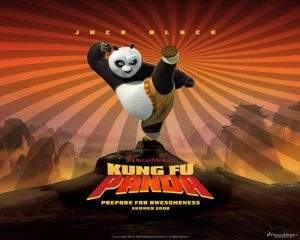
Armed by plentiful capital, driven by eager audiences or consumers, media productions as a vanguard of cultural invasion infiltrate everyone’s everyday life all over the world. Last year, a Hollywood film, the Kung Fu Panda, is probably a perfect example to explain this.
As mammal, the Giant Panda is native to south western China. It seems cute, quiet and always eating bamboo, with it black and white smart dress attracts many visitors in zoos around the world. But is panda that simple? If you just simply go through the PowerPoint, you will found out that panda is symbolized, highly politicalized and commodified.
As a target of commodification, panda is used not only by native Chinese artist but also professional cultural business capitalists. Here comes the Kung Fu Panda. An genius idea to put “Panda” and “Kung Fu” together. What a perfect Chinese character for the worldwide audiences.
As you can see from the slides, the Kung Fu Panda raised so many questions need to be answered. Is a panda from (the) Hollywood(s) still a panda? How a panda is symbolized and commodified? Who has the right to explain the characters of panda and Kung Fu? Is this panda a vanguard of cultural invasion? Why the Chinese unable to make such successful film to gain more say in Chinese culture(s)? It brings me to another concern about China’s communication strategy with the rest of this world (another huge topic).
Just look around of yourself, it seems there is nothing can not be commodified? From a drop of natural mineral water to a bottled manmade soft drink; from a venture enterprise idea to a pack of leveraged equities; from money built Hollywood superstars to power symbolic monarchs; from academics knowledge to governmental power; etc. Even god itself can’t escape from this. In China, the ShaoLin Temple takes over other temples as its brand expansion. In the US, a popular religious website, Beliefnet, was acquired by Murdoch’s News Corporation.
The concerns in China for the Chinese people apply to the whole world. It is not only about the commodification of culture itself but also about who do, how to, what contents and the impacts of this process.


 慧心惠涌@慧观英伦
Nice comments. I very much dislike the movie, and the actor Jack Black, who looks pretty much a stupid man to me. As Chinese culture being increasingly commercialized by the western, the true meaning gets lost. That\’s why China itself should more actively promote its own culture..